W. E. A. Drinkwater, Professional Photographer in Hastings between 1888 and 1892
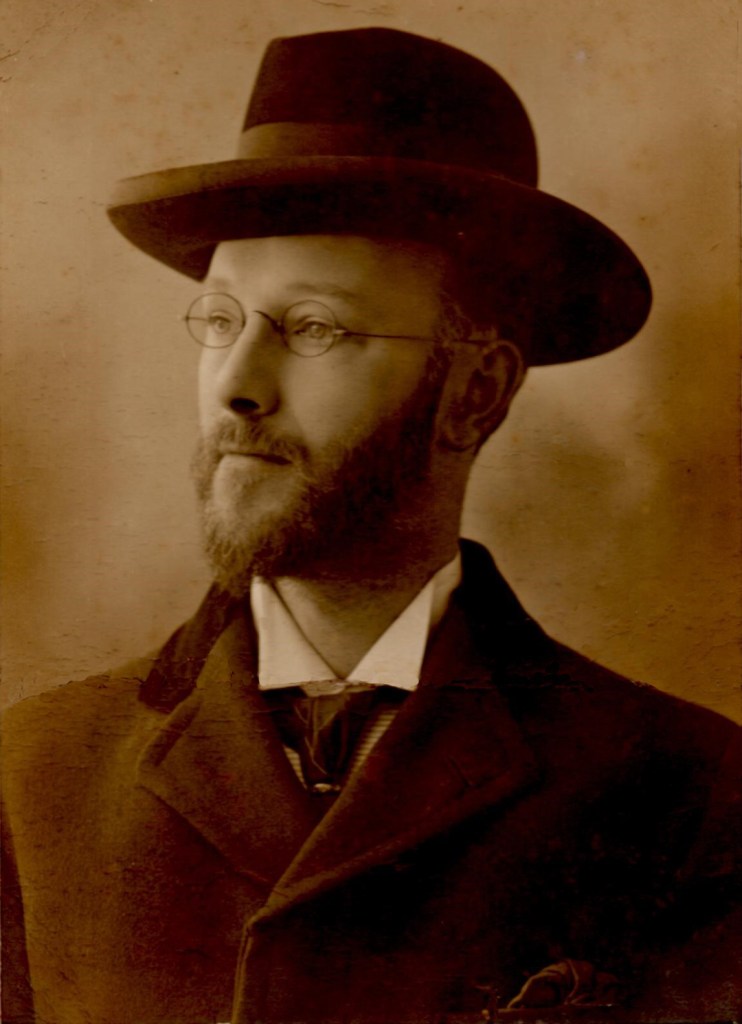
William Edwin Alexander Drinkwater was born in Sparkbrook, Birmingham on 6th September 1865, the only son of professional photographer William Wilson Drinkwater (1845-1895) and his wife Sarah Ann Doveiner (born 1844). William’s father, William Wilson Drinkwater had been born on 24th April 1845 in the village of Grappenhall, near Latchford, Cheshire, the second eldest son of James Drinkwater, a master carpenter & joiner, and his wife, Lydia. By the age of fifteen, William Wilson Drinkwater was already working as an “Artist & Photographer”.
William Wilson Drinkwater had married Sarah Ann Doveiner (born 1844, Tipton, near Wednesbury, Staffordshire) in 1864 in the city of Birmingham. Their son, William Edwin Alexander Drinkwater, was born the following year in Sparkbrook, Warwickshire, now part of the city of Birmingham. The birth of young William was registered in the Solihull district of Warwickshire during the Third Quarter of 1865.
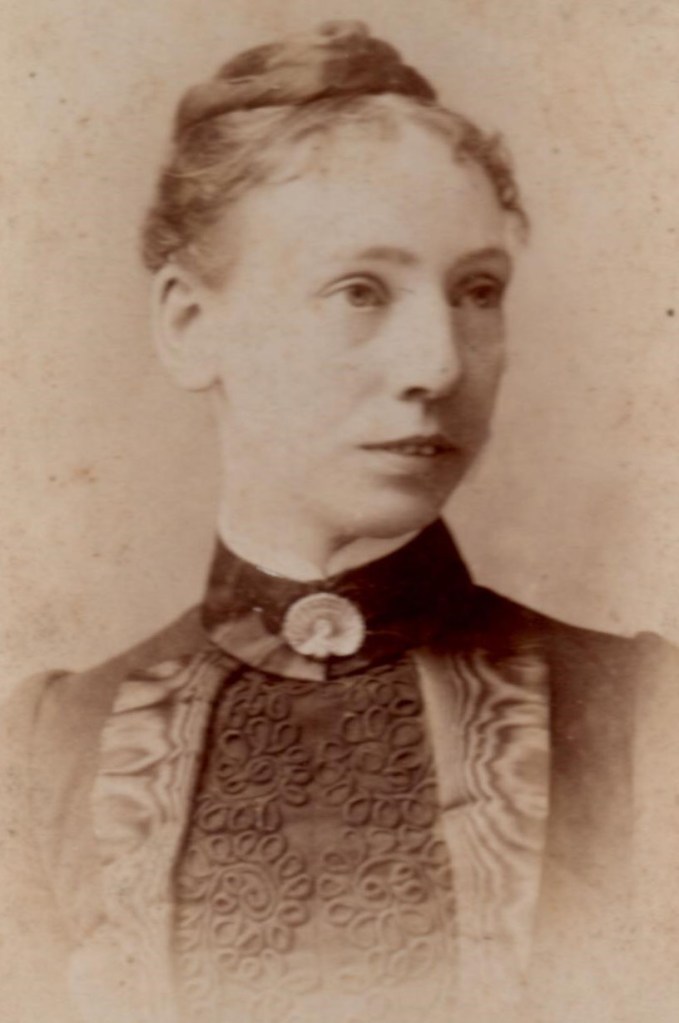

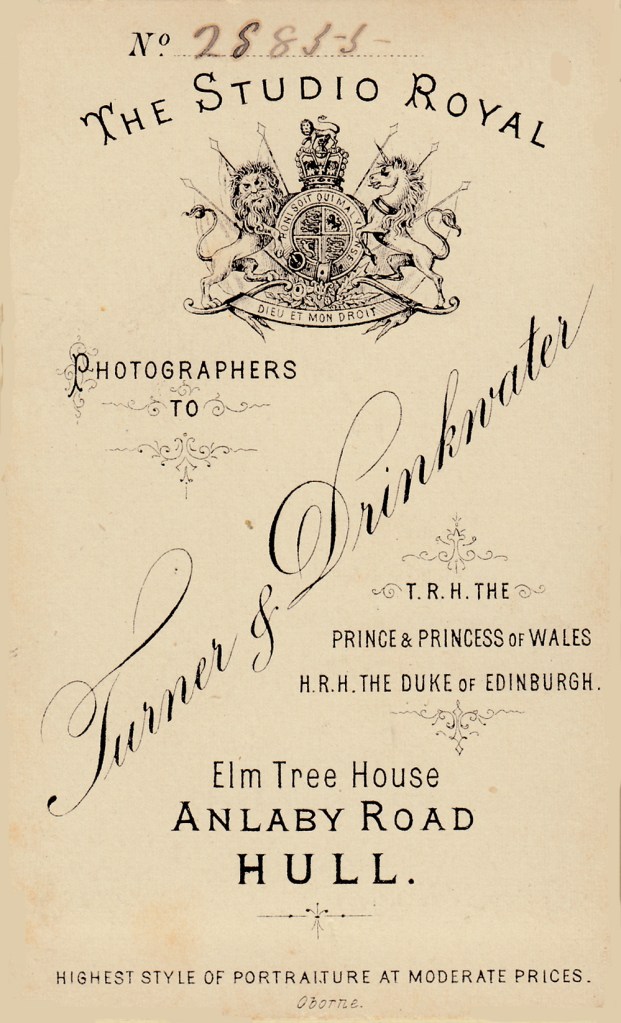
At the time of the 1871 Census, William Wilson Drinkwater, his wife Sarah, and their 5-year-old son, William Edwin Drinkwater, were residing at 8 Portland Place, in the Charles district of Plymouth, Devon. On the census return, William W. Drinkwater is described as a twenty-five-year-old “Photographer”. By 1878, William Wilson Drinkwater had entered into a business partnership with the London photographer Thomas Charles Turner senior (1839-1896) to form the firm of Turner & Drinkwater of Hull. At the time of the 1881 census, William Wilson Drinkwater was managing Turner & Drinkwater’s ‘Studio Royal’ in Anlaby Road, Hull. On the 1881 census return, William Wilson Drinkwater and his wife, Sarah, are recorded at Elm Tree House, Anlaby Road, Hull, the property where Turner & Drinkwater conducted their photography business. On the census return, thirty-five-year-old William Wilson Drinkwater declared that he was a “Photographer employing 4 persons”.

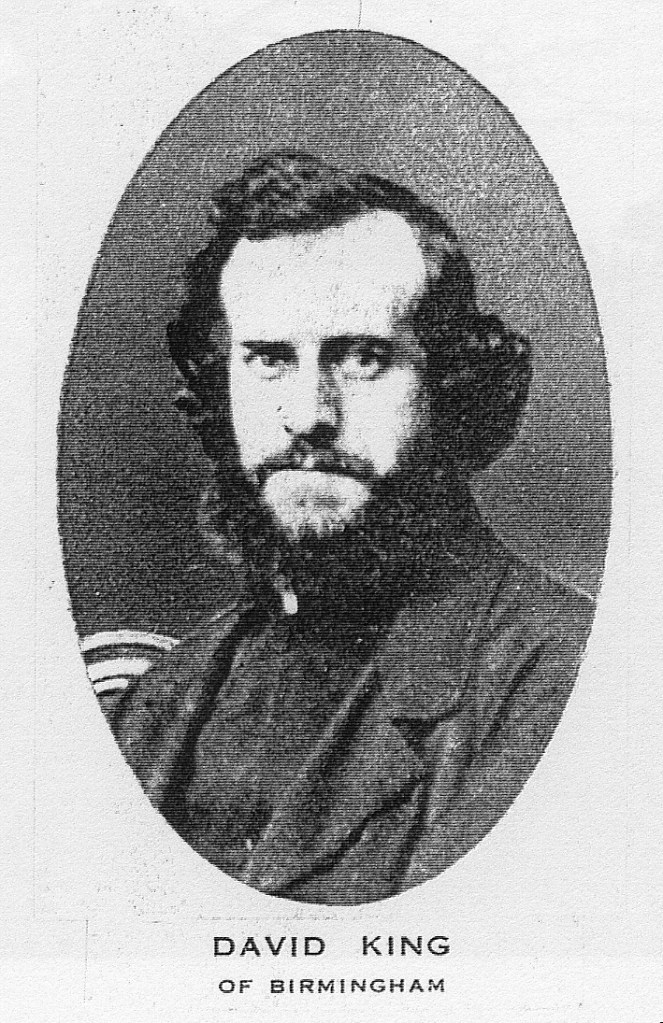
Records suggest that William Wilson Drinkwater was an Evangelical Christian. A newspaper article published in 1880 reports that William Wilson Drinkwater was a leader of a new church established in the Protestant Institute, Kingstown Square, Hull. When he was residing in Birmingham, in the mid-1860s, William Wilson Drinkwater was reportedly an active member of the Geach Street Chapel, an independent church led by David J. G. King (c1819-1894), a leading Christian evangelist. William Edwin Alexander Drinkwater, William Drinkwater senior’s son, may have shared his father’s religious beliefs. In 1882, at the age of 16, Willie Drinkwater won First Prize at the Hastings and St Leonard’s Sunday School Union. When W. E. A. Drinkwater married in 1887, he chose to have the wedding ceremony at a Congregationalist Church in Hastings.
W. E. A. Drinkwater in Hastings
Sometime before 1881, William Wilson Drinkwater’s son, William Edwin Alexander Drinkwater had been indentured as an apprentice to Henry Knight, a professional photographer with a studio at Regina House, 20 Grand Parade, St. Leonards-on-sea, Sussex. At the time of the 1881 Census, William E. Drinkwater was boarding with Henry Knight and his family at 27 Stockleigh Road, St. Leonards, Hastings. On the census return, William E. Drinkwater is described as a 15-year-old “Photographer’s Apprentice”. William’s employer, Henry Knight, is entered on the census as a “Photographer employing 7 men”.
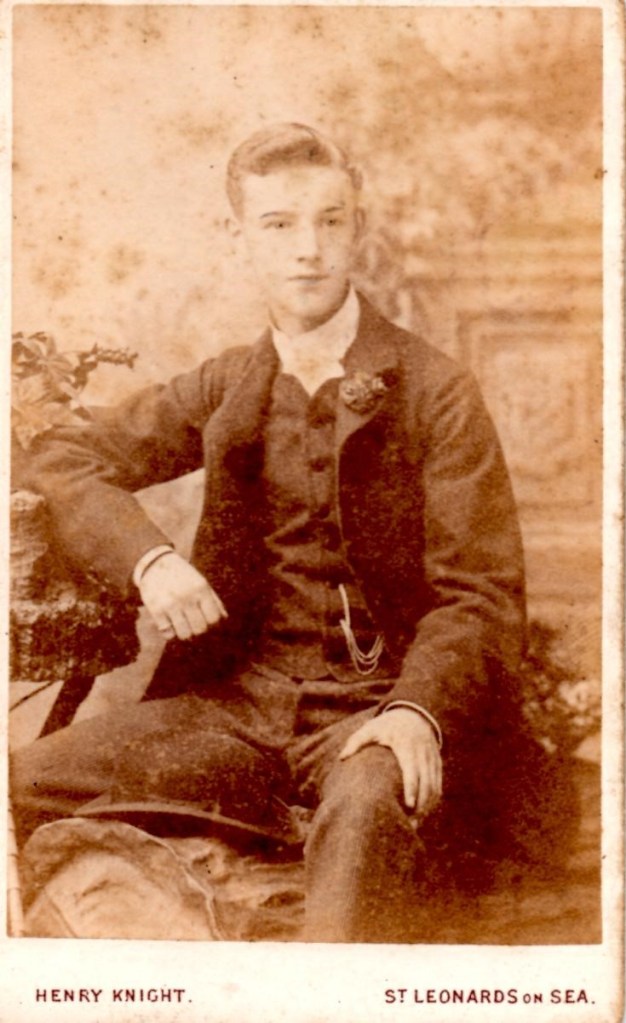
Henry Knight, William E. Drinkwater’s employer, was born in London on 16th September 1847, the son of Harriet and Henry Knight senior, a dealer in marble ornaments and an importer of Italian sculptures, who, by 1851, had purchased the Royal Victoria Arcade in Ryde on the Isle of Wight. By 1869, Henry Knight junior had become a professional photographer. On 23rd March 1870, Henry Knight junior married Frances Elizabeth Pryor at the parish church of Waltham Holy Cross, Essex. Shortly after his marriage to Frances, Henry Knight purchased a photographic studio at 20 Grand Parade, St. Leonards-on-Sea, Sussex from the photographer John Thorp. Henry Knight went on to operate the photographic studio at 20 Grand Parade, St. Leonards-on-Sea for almost 20 years. (1870-1889).
A letter from the St Leonards photographer Henry Knight to William Wilson Drinkwater, dated 16th October 1883, refers to the apprenticeship indenture of William Edwin Alexander Drinkwater, who he refers to as “Willie”. It appears that Henry Knight was releasing 18-year-old Willie Drinkwater from his indenture so that he could return to Hull to assist his father, William Wilson Drinkwater in his photographic studio. In his letter, Henry Knight writes: “I hope you are better & that you find Willie a great help. I trust in after years Willie will be able to look back with some degree of pleasure the years spent in our Family Circle.”
In the same letter, Henry Knight mentions his employees making a “cheap excursion (2/6 there & back, including admission) to the Fisheries” [The International Fisheries Exhibition, a scientific, cultural and fish species exhibition held in South Kensington, London, in 1883] adding “had Willie been here, he would have been a valuable pioneer.” The former friends and colleagues of Willie Drinkwater who made up the staff outing to The International Fisheries Exhibition were Maria Emily Knight (Henry Knight’s sister), Miss Martha Funnell and a “Miss Marshall”. Martha Annie Funnell was employed as a photographer’s assistant at Henry Knight’s studio at Regina House, 20 Grand Parade, St. Leonards-on-sea, at the same time as Willie Drinkwater was working there as a photographer’s apprentice. In future years, Martha Annie Funnell was to become more than a friend and colleague of William Edwin Alexander Drinkwater.
Martha Annie Funnell
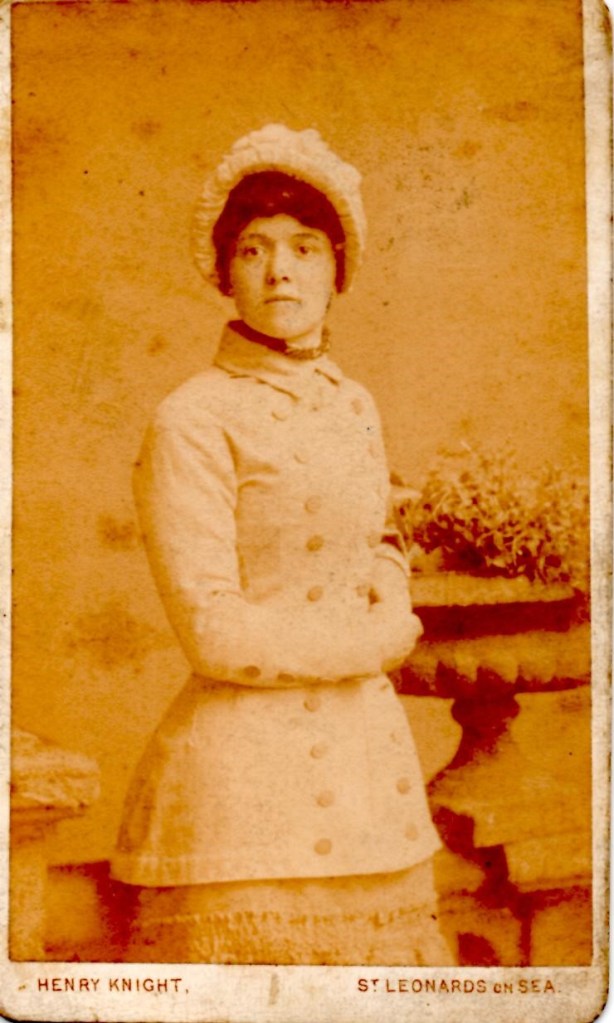

Martha Annie Funnell was born in Hastings on 9th June 1861, the daughter of Janet and John Newman Funnell, a ‘Professor of Music’ who also worked casually as a ‘pianoforte tuner’. John Newman Funnell had been born in Woodchurch, Kent, in 1827, the son of Mary and William Funnell, a butcher. On 28th October 1854, John Newman Funnell married Janet Hill (born c1831, London) in Boxley, Kent.


By 1858, John and Janet Funnell had settled in the Hastings & St Leonards district of Sussex and by 1861 they were living at 2 Trinity Cottages, Dorset Place, Hastings. Their first child, Janet Marie Funnell (born 1858, St. Leonards-on-Sea) died before her 7th birthday, but their second daughter, Martha Annie Funnell (born in Hastings on 9th June 1861) survived into adulthood. In a trade directory published in 1867, John Newman Funnell is listed as a ‘pianoforte tuner’ at 2 Trinity Cottages, Dorset Place, Hastings, but by 1871, he was dead. At the time of the 1871 Census, his widow, Janet Funnell, is recorded living alone at 15 Prospect Place, Hastings, where she was working as a “seamstress”. In 1871, Janet Funnell’s nine-year-old daughter, Martha Annie Funnell was being cared for by Edwin Funnell and his wife in Ashford, Kent. Edwin Funnell (born 1839, Woodchurch, Kent) was the younger brother of John Newman Funnell, Martha’s recently deceased father. Ten years later, Martha Annie Funnell was back living with her mother in Hastings.
The 1881 Census records Mrs Janet Funnell employed as a servant at Bohemia House, a mansion belonging to the wealthy and influential Brisco Family [Bohemia House had been purchased by Wastel Brisco, the younger brother of Musgrave Brisco, a former Mayor of Hastings, High Sherriff of Sussex, and Member of Parliament of Hastings]. Janet Funnell, a 49-year-old widow, was employed as the “Lodge Keeper” at No. 1 Lodge Gate, the main entrance to Bohemia House. Living with Mrs Funnell at Bohemia House Lodge was her daughter Martha Annie Funnell, described on the census return as a 19-year-old “Photographic Assistant”.
Martha Annie Funnell had become acquainted with William Edwin Alexander Drinkwater when they were both employed at Henry Knight’s photographic studio in Grand Parade, St Leonards-on-Sea. Their friendship continued even after Willie Drinkwater had left Hastings & St. Leonards to join his father in Yorkshire.
William E. A. Drinkwater Returns to Hastings
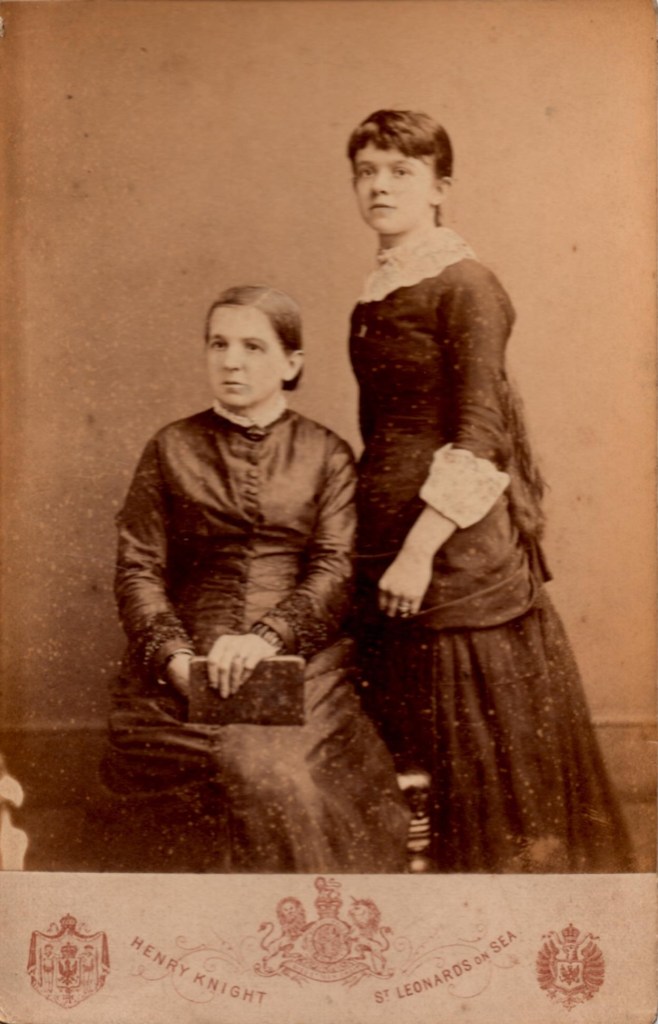
In 1887, William Edwin Drinkwater, then working as a professional photographer in Huddersfield, returned to Hastings to marry Martha Annie Funnell. The couple were married at the Independent Congregational Church in Robertson Street, Hastings, on 28th October 1887. Twenty-two-year-old William E. Drinkwater is described on the marriage certificate as a “Photographer” of 25 Bath Buildings, Huddersfield, while his bride, Martha Funnell, at 26, four years older than her husband, gives no occupation and her home address as Bohemia Lodge, St Leonards-on-Sea, the building where she resided with her mother, Mrs Janet Funnell. Martha’s mother was present at the marriage ceremony, as was William’s father, William Wilson Drinkwater, who is described as a “Photographer” on the marriage certificate. Also attending the wedding ceremony was Edwin Thomas Funnell, aged 22, Martha’s cousin (son of Edwin Funnell senior, the uncle who had cared for Martha when her mother was widowed) and Phillis Jane Thomas, a 24-year-old greengrocer’s assistant from Hastings, who was probably serving as a bridesmaid.

Drinkwater’s Studio at 31 Havelock Road, Hastings
Soon after his marriage to Martha, William Edwin Alexander Drinkwater established a photographic studio at 31 Havelock Road, Hastings. W. E. A. Drinkwater was to operate as a photographic artist in Havelock Road for the next 5 years. Local trade directories indicate that W. E. A. Drinkwater was the proprietor of the studio at 31 Havelock Road, Hastings, between 1888 and 1892. As with most late Victorian photographic studios, Drinkwater’s photography business in Havelock Road specialised in portraiture, mainly produced in the popular carte-de-visite and cabinet card formats. He also provided the usual service of producing enlargements and making further prints of existing portraits. In 1889, W. E. A. Drinkwater was offering to visit his customers’ residences for the purpose of taking family portraits, either posed in front of the family home or in the garden at the rear. By 1890, Drinkwater was advertising “permanent photographic prints in ‘Platinotype’ or ‘Chromotype’.”
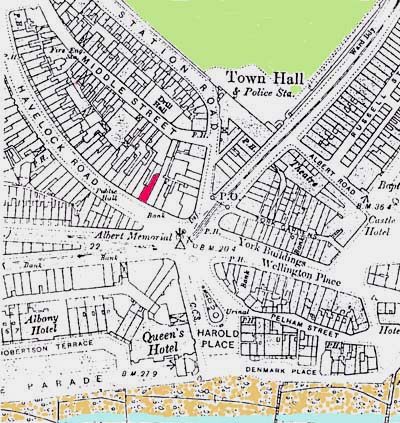
W. E. A. Drinkwater’s photographic studio in Havelock Road was in a prime position. In the publicity on the reverse of one of his carte-de-visite photographs, Drinkwater informed the public that his studio was situated “Over the Coffee Palace”. The Hastings Coffee Palace had first opened its doors at 31 Havelock Road, Hastings, on Tuesday 2nd November 1880. A report in ‘The Coffee Public-House News’ published the day before (1st November 1880) gives us some idea of the type of building Drinkwater occupied and its favourable location: “The situation is an excellent one, being close to both the railway stations in the very centre of the borough, one minute from the sea, Town Hall, memorial, music hall etc., …The exterior of the building has a very pretty appearance.” Presumably, Drinkwater’s photographic studio was situated at the very top of the building on the third floor. The description of the ‘Coffee Palace’ in ‘The Coffee Public-House News’ article explains that the ground floor of 31 Havelock Road was reserved for the spacious entrance hall, principal refreshment bar and the kitchen area. On the first floor, there was a large refreshment room and the manager’s office. The second floor was given over to five bedrooms, presumably the living quarters of the coffee house manager. [In the 1891 Census, No. 31 Havelock Road, Hastings, was occupied by Arthur Clarke, ‘Manager of the Coffee Palace’, his wife and baby son, and two ‘live-in’ domestic servants. William Drinkwater and his family are also recorded at number 31, presumably living on the second or third floor].


W. E. A. Drinkwater’s Family
Martha Drinkwater gave birth to the couple’s first child on 3rd October 1890. The baby boy was named Wilson Newman Drinkwater, a name formed from the middle names of his two grandfathers, William Wilson Drinkwater and the late John Newman Funnell. At the time of the 1891 Census, William E. A. Drinkwater, his wife Martha and their 6-month-old baby son, Wilson, are recorded at 31 Havelock Road, Hastings. On the 1891 Census return, William E. A. Drinkwater is described as a twenty-five-year-old “Photographer (Employer)”. Martha Drinkwater, William’s wife, is entered on the census return as a “House Wife”, aged 29. William and Martha Drinkwater’s second child, Bertram John Drinkwater, was born in Hastings on 25th August 1892. By the time their third child, Lewis Lever Drinkwater, was born on 23rd September 1893, the Drinkwater family were living in Plymouth, Devon.

Photo Source: Stephen Hudson.
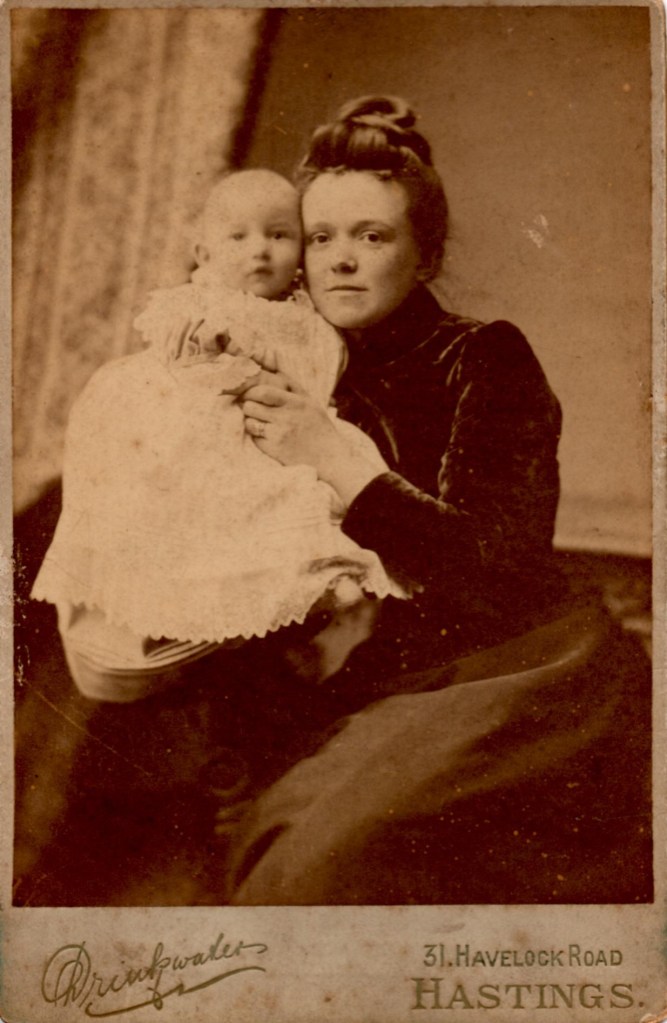
Photo Source: Stephen Hudson.
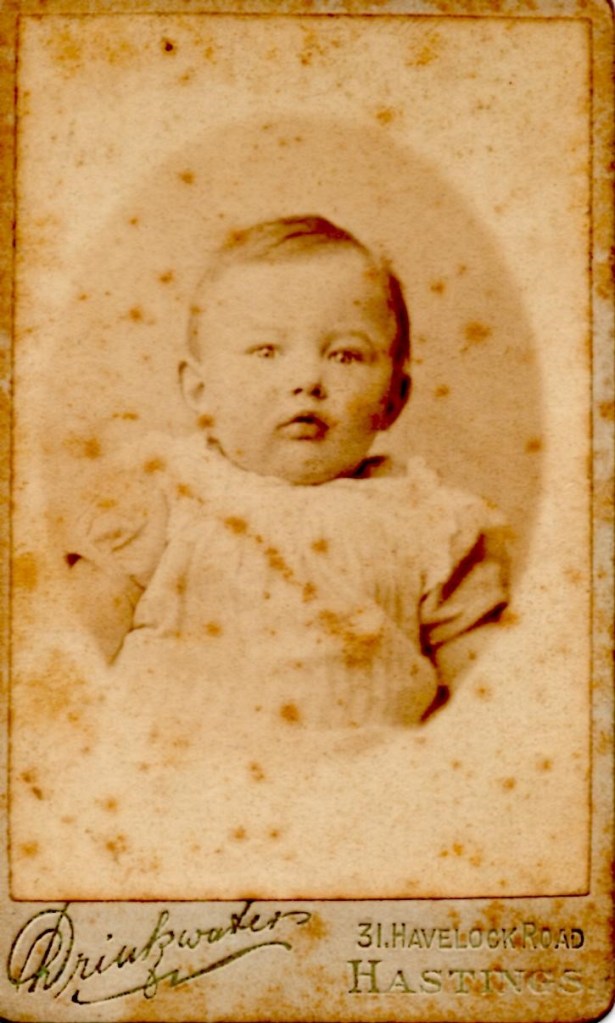
Photo Source: Stephen Hudson.
The death of W. E. A Drinkwater’s Father (William Wilson Drinkwater)
Around 1894, William Drinkwater’s father, William Wilson Drinkwater, had moved down to London to manage the Turner & Drinkwater branch studio at 17 Upper Street, Islington, North London. It was during his stay in North London that William Wilson Drinkwater died on 27th February 1895, aged 49. He was residing at 17 Upper Street, Islington, North London, when he passed away. The Probate Calendar reveals that at the time of his death, William Wilson Drinkwater had effects valued at £99 13s 6d.
W.E.A. Drinkwater in the West Country
William E. A. Drinkwater and his family moved from Hastings to Plymouth, Devon, at the end of 1892 or the beginning of 1893. Drinkwater continued working as a professional photographer in Plymouth for the next nine or ten years. In 1895, W. E. A. Drinkwater was taking photographic portraits at the Priory Art Studio in Wells, Somerset. [The Drinkwater family must have been residing in the city of Wells in 1895. When William and Martha’s daughter, Una Elsie Drinkwater, was born on 8th July 1895, the birth was registered in Wells, Somerset ]. On his return to Plymouth, it appears that for a short time William Drinkwater was in partnership with the photographer William Henry Gill in Devonport under the studio name of Gill & Drinkwater. The photography firm of Gill & Drinkwater is listed at 34 Catherine Street, Devonport, in local trade directories between 1897 and 1898. In December 1897, ‘The Photographic News’ reported that “Mr. W. E. Drinkwater (of Messrs. Gill & Drinkwater of Devonport) gave a lecture and demonstration upon Carbon Printing” before the Plymouth Photographic Society. There is evidence that the firm of Gill & Drinkwater got into financial difficulties at the end of 1898. The trade journal ‘The Photographic Dealer’ reported that Drinkwater was facing ‘Bankruptcy Proceedings’ in 1898, noting that William Edwin Alexander Drinkwater (trading as Gill & Drinkwater), Photographer of 34 Catherine Street, Devonport, had liabilities amounting to £485 16s 3d but only had assets estimated at £38 13s 9d. The report then listed Drinkwater’s creditors, including the Autotype Company of London, which supplied special carbon tissues to photographic printing firms. Another report published in 1899 in the London Gazette noted that Gill & Drinkwater had studios in Devonport, Plymouth and East Stonehouse.
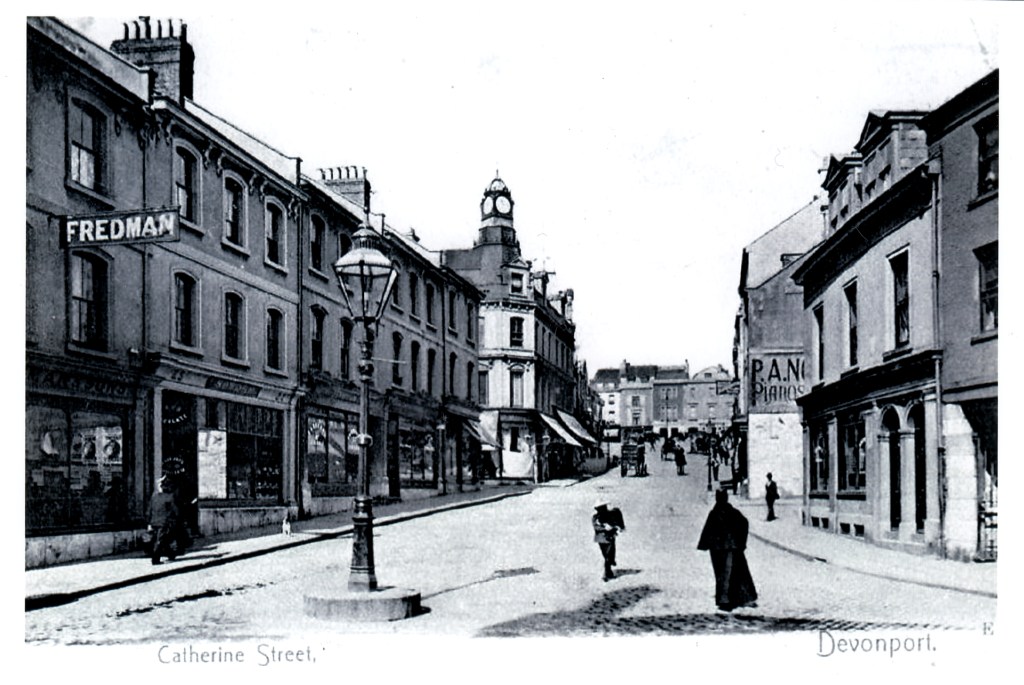
Between 1900 and 1902, William Drinkwater was operating his own photography business in Plymouth. Trade directories for Devon list W. E. A. Drinkwater as a professional photographer at 4 Mendl Terrace, Plymouth, in 1900, and 16 Grenville Road, Plymouth, in 1902.
The 1901 Census records William E. A. Drinkwater’s wife and children at 176 Grenville Road, Plymouth, Devon. When the census was taken, William Drinkwater was not at home. Mrs Martha A. Drinkwater, aged 38, is recorded as the head of household. Residing with Mrs Drinkwater at 176 Grenville Street, Plymouth, are her four children – Wilson (aged 10), Bertram (aged 8), Lewis (aged 7) and Una Drinkwater (aged 5) – and an employed photographer named Thomas Benjamin Burt (born 1870, Devonport) plus his wife and child.
W. E. A. Drinkwater in the Midlands

Between 1904 and 1908, W. E. A. Drinkwater was the proprietor of a photographic studio at Coleridge Chambers, Corporation Street, Birmingham. In 1906, William Drinkwater added a branch studio at 101 London Road, Leicester. Around 1910, William E. A. Drinkwater and his family moved to Nottingham, where Drinkwater established a photographic studio at Temple Buildings, Albert Street, Nottingham. He was still based at Temple Buildings, Albert Street, Nottingham, in 1914.
At the time of the 1911 Census, William E. A. Drinkwater and his family were residing at 109 Wells Road, Nottingham. On the census form, 45-year-old William Edwin Alexander Drinkwater declared that he was a ” Photographer (Employer)” and two of his sons – Bertram John Drinkwater (aged 18) and Lewis Lever Drinkwater (aged 17) are recorded as “Photographer’s Assistants”. Thomas Burt, the photographer who was living in the same Plymouth house as William and Martha Drinkwater in 1901, might have joined his former boss at Drinkwater’s Birmingham and Nottingham studios. Thomas Burt is recorded as a “Photographer (Worker)” in Nottingham at the time of the 1911 Census and between 1904 and 1910 he was living and working in the Birmingham area.


Between 1914 and 1925, William Edwin Alexander Drinkwater resided at 10 Plantagenet Street, Nottingham. Martha Drinkwater’s mother, Mrs Janet Funnell, lived with her son-in-law and his family in Plantagenet Street, Nottingham in her later years. Mrs Funnell died at the Drinkwater’s home in 1917, aged 86. Drinkwater’s daughter, Una Elsie Drinkwater (1895-1971) married twice. Her first husband William Henry Marks, whom Una married in 1922, died at the age of thirty-two in 1928. Towards the end of 1936, Una married Richard Alexander Clark (1890-1976), a clerical officer who, in 1939, was employed by the Government’s War Department.
Two of William Drinkwater’s sons served in the armed forces during the First World War; Wilson Drinkwater in the British Army and Lewis Drinkwater (1893-1963) as an airman in the RAF. When William’s eldest son, Wilson Newman Drinkwater (1890-1957) enlisted in 1915 he was working as an “Engineer’s Draughtsman”. Bertram John Drinkwater (1892-1976), the second eldest son, was drafted into the British Army but he refused to fight on religious grounds, and at a Military Service Tribunal in 1916, Bertram declared that he was a ‘Conscientious Objector’.
William Drinkwater’s daughter, Una Elsie Drinkwater (1895-1971), married twice. Her first husband William Henry Marks, whom Una married in 1922, died at the age of thirty-two in 1928. Towards the end of 1936, Una married Richard Alexander Clark (1890-1976), a clerical officer who, in 1939, was employed by the Government’s War Department.

William Edwin Alexander Drinkwater died in Nottingham on 3rd December 1936, aged 71. William’s widow, Mrs Martha Annie Drinkwater, died in Nottingham three month’s later, on 13th March 1937, aged 75. William and Martha Drinkwater are interred in Nottingham’s Southern Cemetery at Wilford Hill, Nottingham.
At least one of William Drinkwater’s children continued working in the field of professional photography. When the National Register was compiled in 1939, William E. A. Drinkwater’s second eldest son, Bertram John Drinkwater (1892-1976), described himself as a “Photographer (Master)” residing at 23 Dagnall Road, Birmingham.
ACKNOWLEDGEMENTS: A special thank you to Stephen Hudson who kindly provided images from the Drinkwater Family photograph collection and supplied documents from the Drinkwater Family archive e.g. birth certificates, correspondence, marriage certificates, death certificates and other official documents. Although I have conducted my own research into the life and career of William Edwin Alexander Drinkwater, examining census returns, trade directories, newspaper reports and magazine articles, etc., I have found the information on the Family Trees posted on the Ancestry genealogy website very useful, in particular the Family Tree created by a researcher into the Pidgeon Family, identified by the user name “dip1951” of Nottinghamshire.
W. E. A. Drinkwater: Gallery of Photographs
Click on this link to view a gallery of photographs by William Edwin Alexander Drinkwater
 Victorian Sussex Photographers